
Design Rate
Missions/hour with SKU mix
Boundary: peak factor, accumulation depth, replenishment overlap and exception recovery must share one record.
Open rate worksheet →Map tote and pallet missions, charging windows, traffic rules and WMS/WCS/PLC ownership against load units, SKU velocity and peak windows. Hikrobot keeps evaluation attached to the routes your distribution center actually runs—so fleet size is compared with the same acceptance gates.
Missions/hour with SKU mix
Boundary: peak factor, accumulation depth, replenishment overlap and exception recovery must share one record.
Open rate worksheet →Factory acceptance samples
Boundary: mission accuracy, traffic priority and alarm ownership tested before shipment, not only after install.
Review FAT framing →Site acceptance under live loads
Boundary: witness roles, fallback routes and retest triggers when traffic rules change after go-live.
Review SAT gates →Access · diagnostics · spares
Boundary: mean time to repair paths and critical spare staging stated before operational handover.
Discuss coverage →Product conversations stay attached to mission definition, traffic rules, charging windows and the control layer that must own each handshake.

Guided pallet and tote loops sized to aisle geometry, load stability and traffic priority—not isolated meters-per-minute claims.
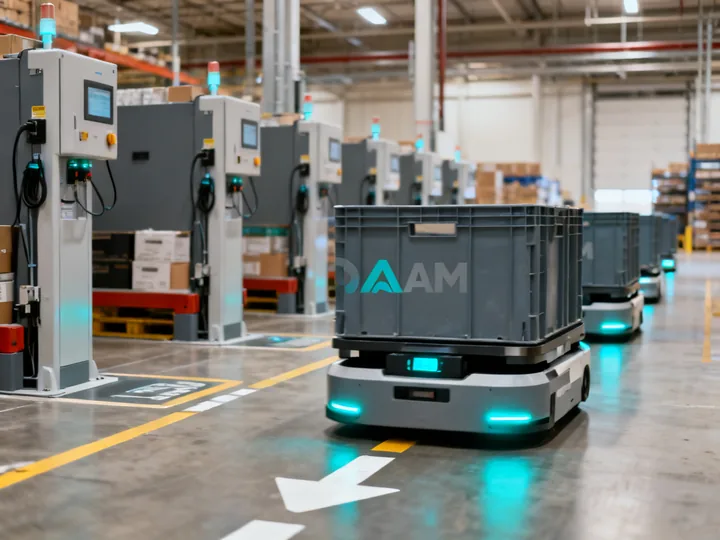
Autonomous routes, charging windows and exception recovery reviewed against order-line structure and cutoff windows.
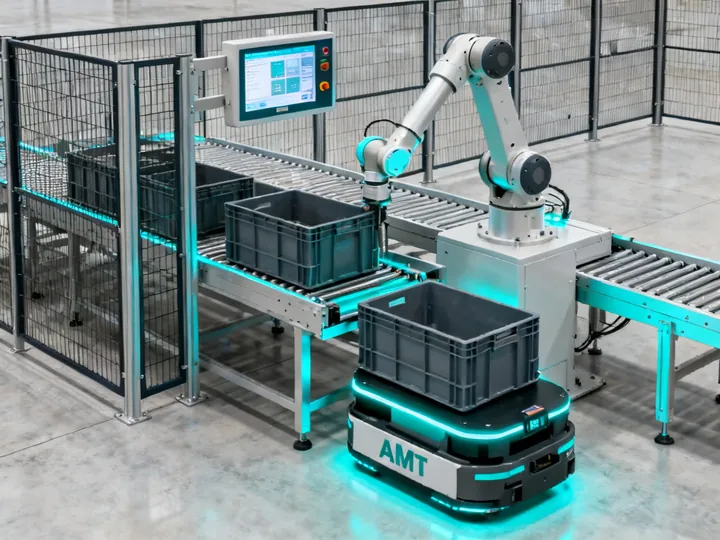
Picking cell recipes, fleet-management handshakes and PLC permissive states stay paired with outbound wave timing.
Use these groups as a shared worksheet. Values are planning scaffolds until your site data, interface owners and acceptance protocol are attached.
| Load & mission contract | |
|---|---|
| Load unit envelope | Length, width, height, mass, overhang and orientation for tote, carton or pallet families |
| Mission definition | Pickup confirmation, drop confirmation and what counts as a completed move or order line |
| Peak window | Duration, recurrence, replenishment overlap and whether backlog is allowed during recovery |
| Site & traffic geometry | |
| Aisle & floor | Clear width, turning envelopes, floor joints, gradients and restricted pedestrian zones |
| Traffic rules | Priority tables, crossing ownership, blocked-route fallback and manual intervention points |
| Charging map | Dock count, charge window vs peak window, energy state thresholds and spare charger staging |
| Controls & acceptance | |
| Interface ownership | WMS, WCS, WES, PLC and fleet-management owners for release, ack, timeout and escalate |
| FAT / SAT evidence | Nominal rate, peak buffer, host silence, blocked destination and recovery scenarios with named witnesses |
Compare SKU depth, peak factor and load-unit mix before locking fleet architecture. Planning ranges are scaffolds, not certified throughput claims.

High SKU velocity, short cutoff windows and mixed tote/carton missions that stress traffic rules and charging windows.
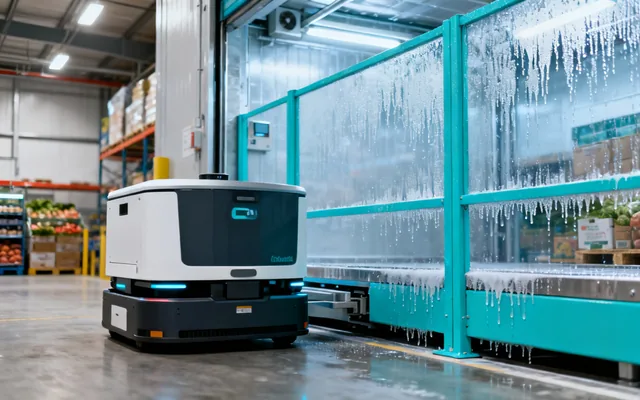
Store-order waves, tote lid integrity and temperature-adjacent buffering with named WCS release owners.
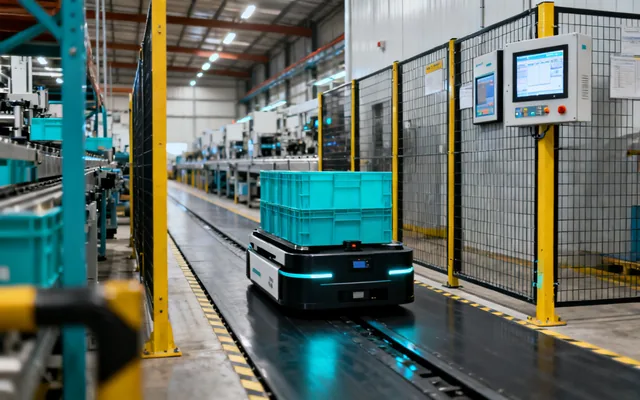
Takt-aligned release, isolatable spur lanes and retest triggers when mission recipes change after SAT.
Share load units, peak windows, interface owners and exception patterns. Hikrobot responds with a structured evaluation path—not a brochure dump. State the transaction definition, buffer rules and who may authorize restart after a stop.